Engineered quartz earned its place in modern kitchens and bathrooms because it is dense, non-porous and easy to live with. Over the last few years, however, the conversation around engineered stone has widened. Designers, fabricators and homeowners now ask not only how a surface looks and performs, but also how it is made and how safely it can be handled. Zero crystalline silica surfaces are the industry's answer to that question.
What is crystalline silica?
Silica (silicon dioxide) is one of the most common minerals on earth. It occurs in two broad forms. Crystalline silica, such as the mineral quartz, has an ordered crystal structure. Amorphous silica, such as glass, does not.
Conventional engineered quartz is made mostly of crushed natural quartz, so it contains a high share of crystalline silica. The finished slab is stable and inert in daily use. The concern is in fabrication: when slabs are cut, ground or polished without proper controls, they can release fine respirable crystalline silica dust, and long-term exposure to that dust is a recognised occupational health risk for stone workers.
What does "zero crystalline silica" mean?
A zero crystalline silica surface replaces the crystalline quartz in the mix with alternative mineral materials, so the slab is crafted with Zero Crystalline Silica material. The goal is simple: keep the look and everyday performance people expect from a quartz surface, while removing the ingredient that creates the main dust hazard during fabrication.
It is worth being precise about the term. "Zero crystalline silica" refers to crystalline silica specifically. It does not mean a slab produces no dust at all when it is cut, and it does not replace good workshop practice. We cover that in our fabrication guide for zero crystalline silica surfaces.
Why the industry is moving in this direction
Regulators and health agencies in several markets have tightened rules on crystalline silica exposure in stone fabrication, and buyers increasingly ask for safer materials across the supply chain. For architects and specifiers, choosing a zero crystalline silica surface is a practical way to support the people who cut and install the stone. For homeowners, it means choosing a countertop that was made with the whole value chain in mind.
What stays the same
Choosing a zero crystalline silica option does not mean choosing a different look. At Taimei Stone it is offered on the same designs you see in our catalogue, and every one of those designs shares the same standard specification:
- Jumbo slabs of 3230 × 1630 mm (127" × 64")
- 20 mm and 30 mm thickness
- Polished or honed finish
- Prefabricated countertop sizes of 26", 36", 42" and 52"
Which Taimei Stone designs are available?
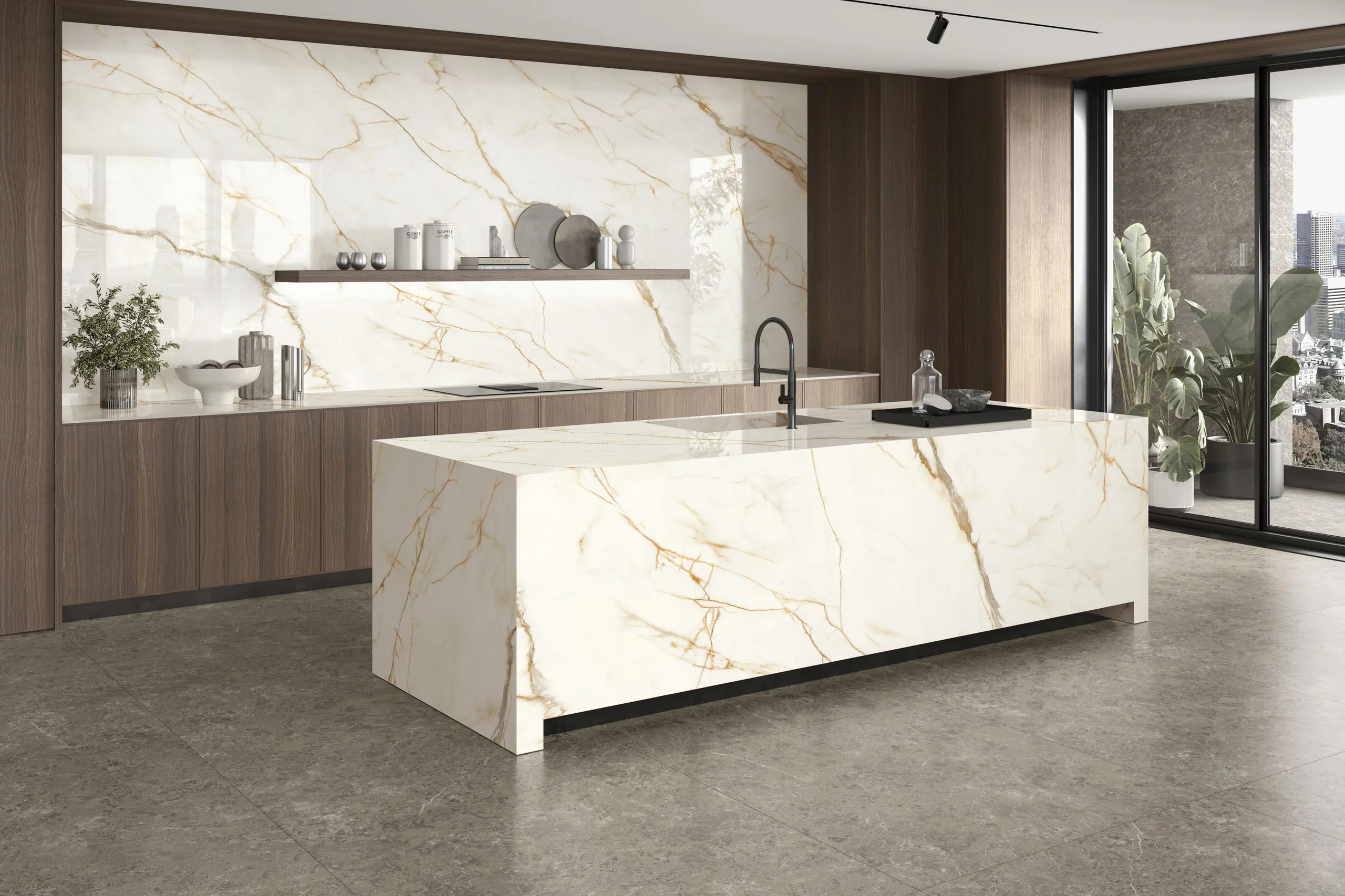
All Taimei Stone collections — Printed Surfaces, Trending, Nature and Aristo — are available in Zero Crystalline Silica, allowing customers to choose from our entire design range in this formulation. Every design in our Printed Surfaces collection is available in this formulation, from soft grey veining such as 5907H Bianco Fumo to warm gold veining such as Sofitel Gold 5912.
You can find the "Available in Zero Crystalline Silica" note in the specifications of each product page.
Made in our own factory
Established in 2019, TAIMEI STONE operates a dedicated manufacturing facility in Chonburi, Thailand, specializing in the production of premium engineered quartz surfaces, including printed quartz and regular quartz. Our facility is equipped with four advanced production lines, with an annual production capacity exceeding 600,000 square meters and monthly output of more than 100 containers. Producing in-house lets us offer Zero Crystalline Silica options across our entire product range.
Talk to our team
If you are planning a project or sourcing for a fabrication shop, contact us and tell us which designs you are interested in. Our team will confirm availability, thickness and lead time for the zero crystalline silica version.